
Money touches almost everything in your life, so where you keep it should feel like a real partnership, not just a place to park a paycheck.
A credit union is a not‑for‑profit, member‑owned financial cooperative, which means any earnings after expenses are used to improve member rates, fees, and services instead of going to outside owners.
In this blog, you will learn what credit unions are, how they work, how they compare to banks, and what to know before joining one.

What Are Credit Unions?
A credit union is a financial institution designed to serve its members. When you join, you become a part owner and gain access to accounts, loans, and digital tools to help you manage your money.
Many credit unions, including City & County Credit Union, are built around specific communities. That local focus helps keep decisions grounded in what people in those areas actually need.
How Credit Unions Differ From Banks
Credit unions and banks offer many of the same everyday financial services. The key difference is how each institution is structured and who it is designed to serve.
Credit Union vs Bank: What’s the Difference?
| How it works | Credit union | Bank |
| Who owns it | Members who use the accounts and services | Individuals or companies that own bank stock |
| Why it exists | Serve members and support their financial goals | Generate profit for shareholders |
| Where earnings go | Returned to members through rates, fees, and services | Paid to shareholders or reinvested to grow the bank |
| Who has a voice | Each member gets one vote | Voting power depends on shares owned |
City & County Credit Union, for example, has followed that model since 1928: no stockholders, no profit targets, just 62,000+ members across the Twin Cities and greater Minnesota and Wisconsin who share ownership of the institution itself. That's why credit unions can often offer lower rates and fewer fees — the difference isn't marketing, it's the business model.
How Credit Unions Work
When people ask “how do credit unions work,” they are usually trying to understand the model, not the mechanics.
Credit unions follow a cooperative structure where members support one another: your deposits help fund loans and services for fellow members, and earnings are used to strengthen the credit union for everyone
Here is one way to picture it:
 1. You join and open an account
Your initial deposit establishes your membership and ownership.
2. Members’ money is pooled
Deposits create the shared resources the credit union uses to serve members.
3. Members borrow from that pool
Loans for cars, homes, education, and everyday needs come from member deposits.
4. Earnings support members
After covering necessary operating costs and required reserves, remaining funds can support better rates, fewer fees (when possible), and improved services for the membership as a whole.
This structure keeps the focus on members and the communities they call home.
Are Credit Unions Safe?
Yes. Most credit unions are insured by the National Credit Union Administration (NCUA), a federal agency that protects your deposits if the credit union ever fails. When a credit union is NCUA-insured, your money is protected up to at least $250,000 per person, per credit union, for each type of account ownership — the same level of federal protection used by banks.
Many credit unions, including City & County Credit Union, also carry additional insurance that increases how much of your deposits are protected.
Benefits of Joining a Credit Union
Once you understand how credit unions work, it’s easier to see why people choose them.
Members often appreciate:
- Competitive rates on savings and loans, which can help money grow or reduce borrowing costs.
- Fewer or clearer fees, making everyday banking easier to manage.
- Personal guidance, with staff who explain options in straightforward language.
- Community focus, where deposits help support local families and businesses.
Who Can Join a Credit Union in Minnesota?
Each credit union has its own membership rules. You do not need a special job or invitation; you simply need to fit those guidelines.
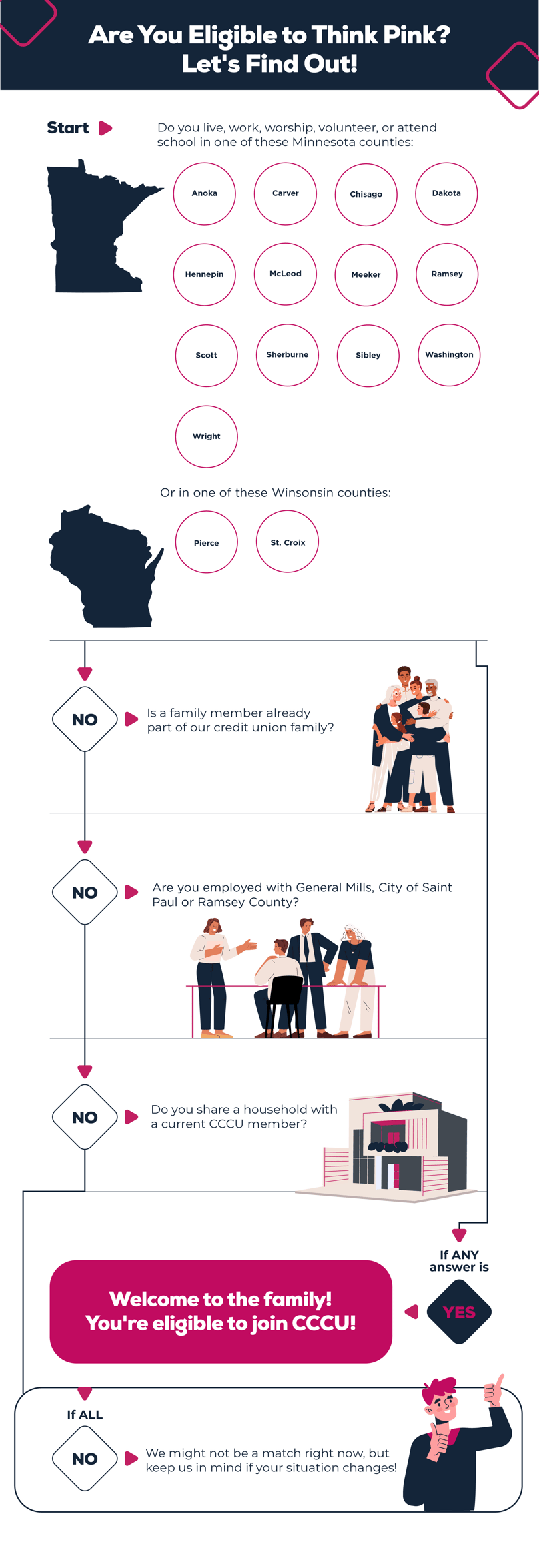
City & County Credit Union serves people connected to certain Minnesota & Wisconsin counties. You may be able to join if you live, work, worship, volunteer, or attend school in:
Minnesota Counties
- Anoka
- Carver
- Chisago
- Dakota
- Hennepin
- McLeod
- Meeker
- Ramsey
- Scott
- Sherburne
- Sibley
- Washington
- Wright
- Pierce
- St. Croix
This membership area, called a field of membership, describes who the credit union is allowed to serve and keeps the focus on local communities.
How To Switch to a Credit Union
If you decide a credit union is a better fit, the next step is moving your accounts over. To make that process straightforward, we created a free step-by-step resource.
Download Your Step‑by‑Step Switch Guide
This free downloadable guide walks you through switching from your current financial institution to a new one at your own pace.
Inside, you will find:
- What to look for in a new financial institution
- How to identify and update automatic payments and direct deposits
- How to open a new checking or savings account
- How to close your old account once everything has moved
- Printable charts to compare institutions, track payments and deposits, and store new account information
Download the guide and take the first step toward finding a financial institution that fits your life.